We are the AIRE collective research group. We are philosophers and researchers based in Galway, working at the intersection of Public Philosophy and Environmental Philosophy, particularly interested in the philosophical and moral value of attention. As part of the Philosophy in the Wild initiative, our project will consist of a series of meetings and practices spread over several months.
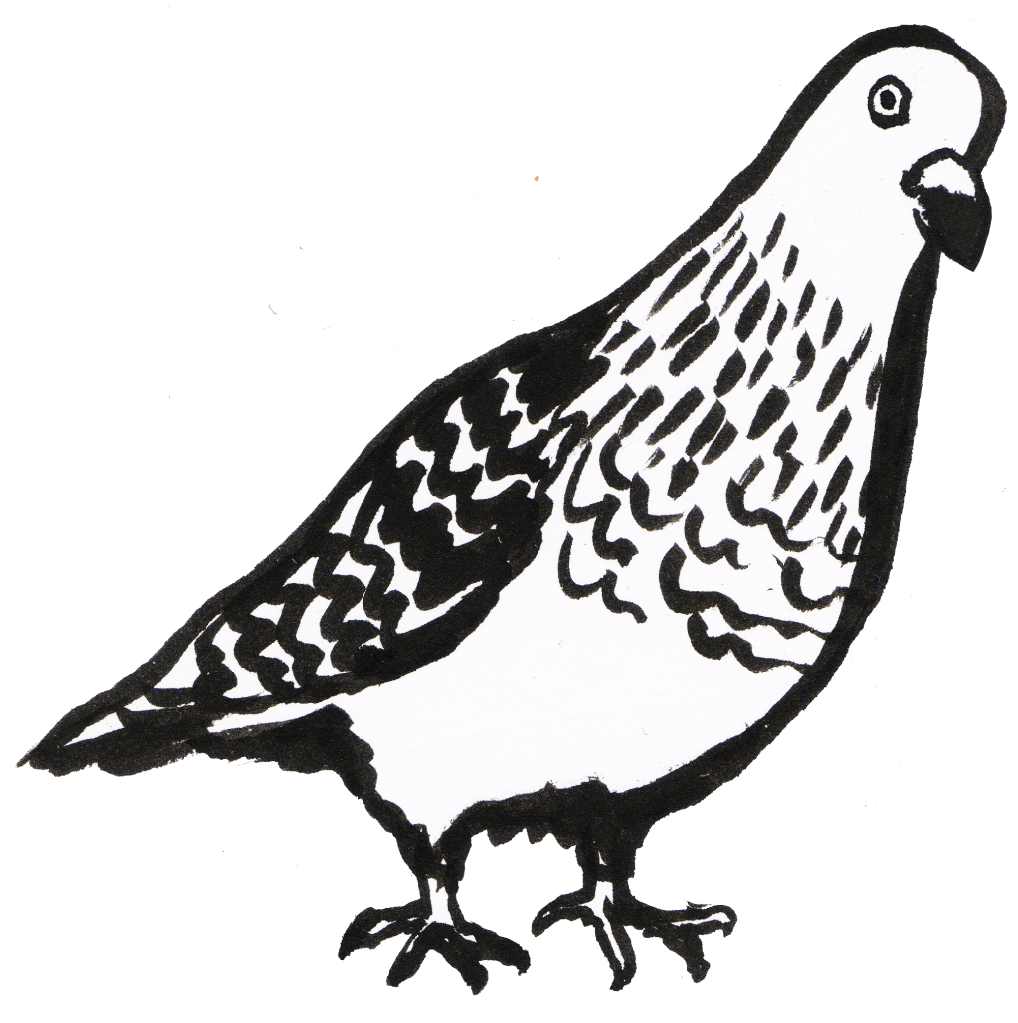
Our central aim is to explore the complex relationships between non-charismatic species and humans, focusing in particular on those species inhabiting the university campus – an environment we often conceive as exclusively human. Instead, we want to highlight how the campus is already a ‘mixed’ space, shared with a multiplicity of non-human entities that deserve our attention and care. An example of these species on campus, that is ever-present yet frequently overlooked or dismissed as a nuisance, are pigeons. As animals that live in close proximity to humans yet rarely granted meaningful moral or aesthetic consideration, pigeons epitomise the kind of overlooked presence we hope to revalue. Their ambiguous status – neither truly wild nor fully domesticated – makes them a perfect lens through which to explore urban multispecies entanglement.
Project Activities
The project will include several phases and events:
· Early Summer 2025: We will install small cameras and sound recorders in the garden of the Philosophy Department – already known, somewhat ironically, as the Philosophy in the Wild Garden – to document the lives and presence of our non-human companions on campus.
· Posters will be circulated among students and staff, inviting them to pay attention to on-campus species and contribute by photographing, filming, or recording sounds of these beings. These contributions will be regularly shared on our social media and will form the basis of an artistic exhibition at the project’s conclusion.
· 10-11 October 2025: Some of us are on the organising board of the IPS. We are organising a pre-event prior to the IPS 2025 Conference on Nature, where we will invite a university scientist to give a talk about non-human species on campus. Conference participants will be encouraged to contribute their own photos, videos, sound recordings, and short reflections or philosophical quotes inspired by their engagement with the theme.
Final Event–March 2026
The final event will span two to three days and include both reflective and experiential components.
First Week – 4 March, 11:00–12:00
THB-G010
CPI 1: Beauty, Attention, and the Non-Charismatic
This first session will centre on the role of beauty in shaping our attention towards non-human animals.
Phase 1 – Community of Philosophical Inquiry (CPI)
We will begin with a CPI focused on how aesthetic preferences often guide ethical concern. Ethical attention is frequently directed towards charismatic or visually appealing species, which creates a moral and ecological problem for those that are invisible, endangered, or considered ‘ugly’ or repulsive. Pigeons, for instance, whose grey tones and ubiquity often render them invisible or undesirable in the public imagination, will serve as a concrete case, despite their rich behavioural complexity.
Through philosophical dialogue, participants will be invited to reflect on how attention is distributed and to expand the circle of concern to include non-charismatic species inhabiting shared environments, such as insects in the garden or animals along the nearby river.
Second Week – 11 March, 11:00–12:00
THB-1001 The Bridge Meeting Room
CPI 2: Language, Perception, and Reimagining Experience
The second session will focus on the role of language and perception in shaping human understandings of the more-than-human world.
Phase 1 – Community of Philosophical Inquiry (CPI)
Drawing on Mary Midgley (1984; 1994), this CPI will explore how anthropocentric assumptions embedded in language and perception obscure the perceptual worlds of non-human animals and limit possibilities for ethical cohabitation. The session will take a more deconstructive approach, inviting participants to question habitual frameworks and to imagine alternative, non-anthropocentric ways of experiencing the world.
Together, participants will reflect on shared existence in hybrid environments such as the university campus, paying particular attention to sensory pollution and other barriers to multispecies cohabitation.
Third Week – 18 March, 11:00–12:00 and 17:30–18:30
THB-1001 The Bridge Meeting Room
Closing Phase: Multispecies Poetry
During the week following the second CPI, participants will take part in a creative phase dedicated to the composition of a multispecies poem.
This process will integrate:
- informal notes from sit spots
- sensory materials collected during the activities
- more structured reflections and selected quotations gathered throughout the project
The poem will emerge as a collective artefact, in which non-human beings are not treated as metaphors but as co-authors.
Why Participate?
By taking part, you are invited to cultivate attention and mindfulness while engaging with philosophical ideas inspired by thinkers such as Simone Weil, Iris Murdoch, and Mary Midgley. The project encourages you to notice and learn from the often-overlooked, non-charismatic species that share the campus with us, and to contribute to making their presence visible.
How to Participate
Participation is simple and open to everyone, and it begins with attention.
Start by looking around your campus and noticing who else shares this space with you: birds, insects, trees, plants, and other forms of life that often go unnoticed. Take time to engage respectfully with these presences. Slow your pace, remove your headphones, take a different route, watch, listen, touch, or simply stay still for a moment. Be present, without disturbing the life around you.
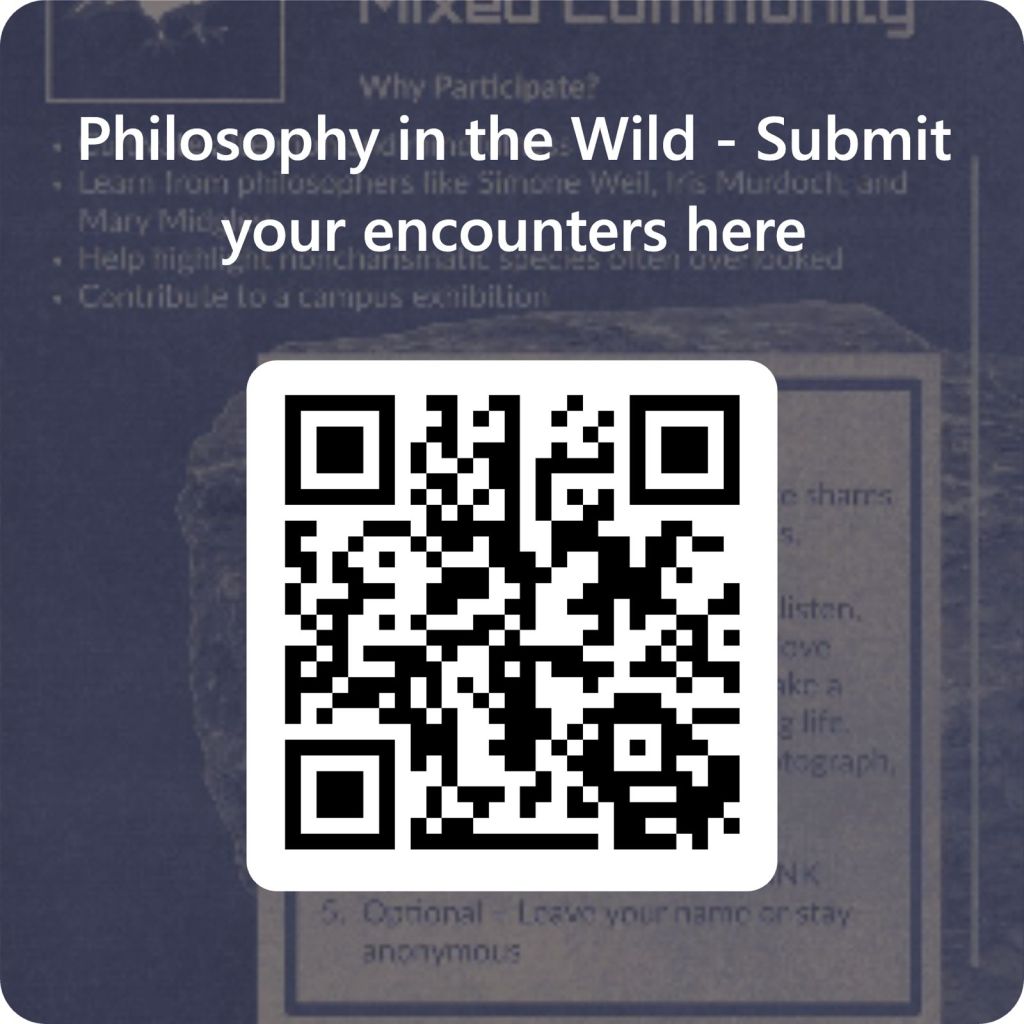
You are then invited to record your encounters in any form that feels appropriate: a photograph, a short video, a poem, a brief text, or a personal reflection. Finally, upload your contribution using the QR code provided belowe. You may choose to leave your name or remain anonymous.
All contributions will become part of a collective campus exhibition, helping to make visible the more-than-human lives that surround us.
For more info, follow us on LinkedIn or
write to us at info@airecollective.org
See you there!
 AIRE
AIRE 
Leave a comment